

>_ knowledge base

Financial concepts.
Plain language.

Articles on budgeting, debt, saving, and everyday money decisions — written for people who want to understand their finances, not pass a test.

Person reviewing credit card statement at a kitchen table with focused attention
Debt

What APR actually means in your wallet

Annual percentage rate is the number printed on every credit card offer, but most people have a rough and imprecise understanding of what it actually means for them. APR is the yearly cost of borrowing money expressed as a percentage. But credit cards typically charge interest monthly, which means the actual effective rate you pay can be slightly higher than the APR suggests.

Here's the part that matters most: if you carry a balance month to month, interest compounds. The interest you didn't pay last month gets added to your principal, and next month you're paying interest on that interest too. This is why minimum payments on credit cards can take years to pay off a balance that seems modest at first glance. Understanding this mechanic doesn't tell you what to do. But it does change how you see the decision.

Continue reading
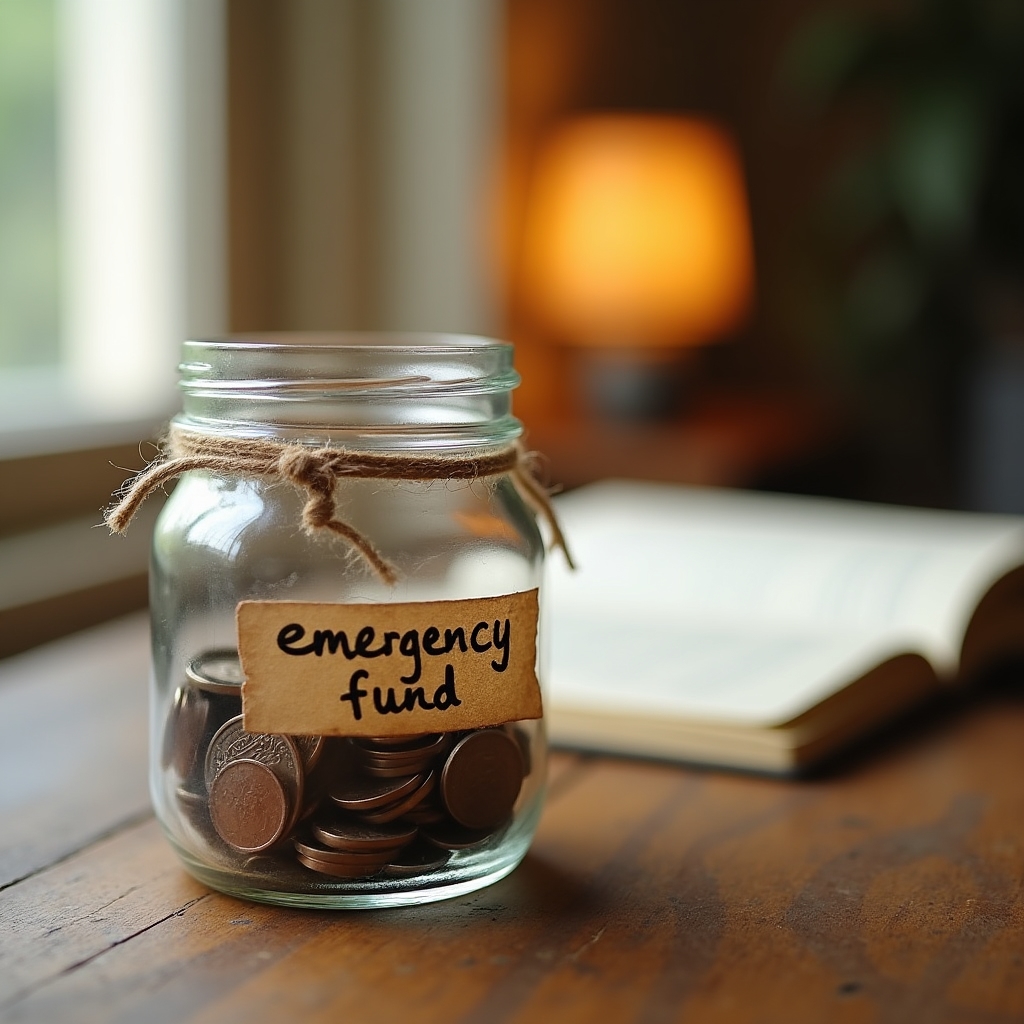

Glass jar with coins labeled emergency fund on a wooden table with natural light
Saving

Starting an emergency fund when money is tight

The conventional wisdom says you need three to six months of living expenses set aside as an emergency fund. That's genuinely useful advice if you're in a position to save that much. But for a lot of young adults, the starting point is more like: I have forty dollars left after rent and bills. Where does an emergency fund fit into that?

The answer is that even small emergency funds have value. Having anything set aside changes how you respond to unexpected expenses. A minor car repair or a medical copay doesn't have to go on a credit card if you have even a small cash buffer. The goal isn't to hit the three-month target immediately. It's to build the habit and the balance simultaneously, starting from wherever you actually are.

Continue reading
Person writing saving goals in a financial journal in a warm loft setting
Habits

Why budgets fail — and what to do instead

Most budget failures aren't failures of discipline. They're failures of design. A budget that's too restrictive, too complicated to maintain, or built around an idealized version of your spending is going to collapse eventually. Not because you lack willpower, but because the system was poorly matched to how you actually live.

The most useful budget is one you'll actually use consistently, even if it's less theoretically optimal than a more elaborate one. That might mean simpler categories, more honest estimates of irregular spending, and built-in flexibility for the weeks when things go sideways. Sustainability matters more than precision in personal finance, especially at the start.

Continue reading
Young adult thoughtfully comparing prices while grocery shopping with purposeful focus
Spending

The subscription audit: finding money you forgot you spent

Subscription services are designed to be frictionless, which is another way of saying they're designed to be easy to forget about. A streaming service here, a cloud storage tier there, a gym membership you stopped using in February — these small amounts don't feel significant individually, but they add up to a real monthly figure when you list them all out.

A subscription audit is simply the practice of listing every recurring charge on your bank and credit card statements and deciding, deliberately, which ones you want to continue. Not a one-time exercise, but a regular one. The point isn't to deprive yourself. It's to make the spending conscious rather than invisible. Conscious spending is a fundamentally different thing from careless spending, even when the dollar amount is identical.

Continue reading
Young professional studying loan documents with focused expression at a modern desk
Debt

Understanding your student loan statement

Student loan statements contain a lot of numbers, and most of them look similar until you understand what each one represents. Principal is the amount you borrowed. Interest is what's accrued since your last payment. The outstanding balance is the sum of both. Your monthly payment is applied to interest first, and whatever remains reduces the principal.

This sequence matters because in the early years of repayment, a large portion of each payment goes to interest rather than reducing what you owe. Understanding this doesn't change the mechanics, but it does change how you interpret your progress and how you think about any extra payments you might make. Knowing where your money goes is the foundation of making better decisions about it.

Continue reading
Clean organized desk with budgeting tools and a notebook showing financial planning in progress
Budgeting

How to handle an irregular income in your budget

Budgeting with a steady paycheck is relatively straightforward. Budgeting with income that varies month to month is a genuinely different challenge that most standard budgeting advice doesn't address well. The approach that works for most people with irregular income is to budget based on a conservative estimate of your monthly earnings rather than an average or an optimistic projection.

This means using a lower baseline for your budget and treating months where you earn more than that baseline as an opportunity to build reserves or pay down debt rather than expand spending. It's a more conservative approach than most people want to hear, but it creates a financial buffer that makes variable income less stressful over time. The goal is a system that holds even in a slow month.

Continue reading

Want to go deeper?

The blog gives you a taste. The courses give you the full framework and practical tools.